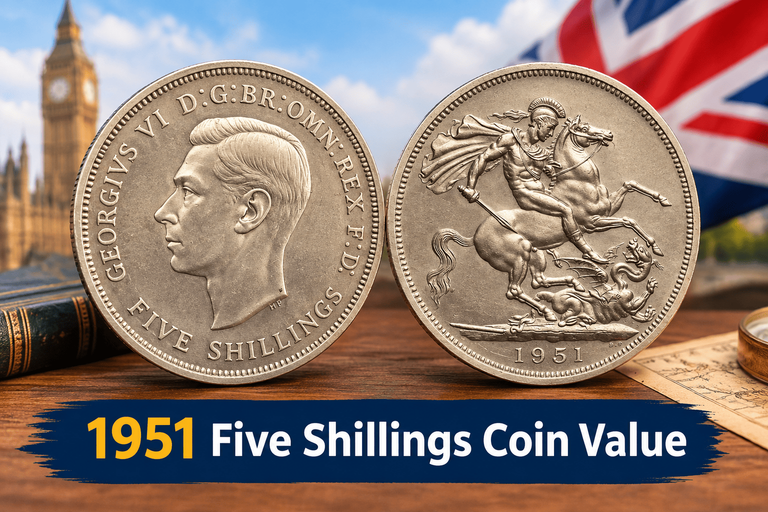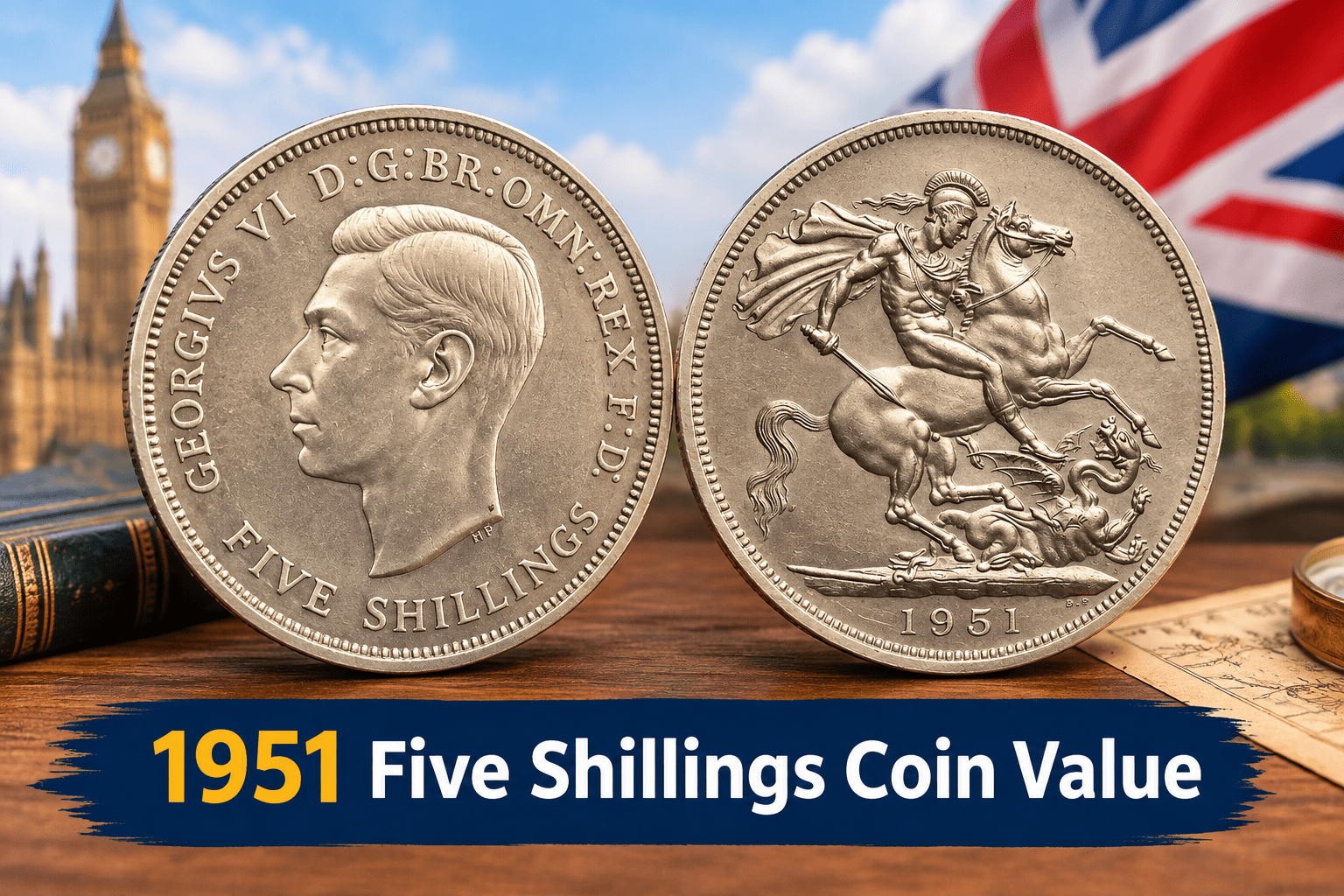
1951 Five shillings coin value
Introduction
British Old 1951 Five Shillings coins offer a way fascinating to explore the history of the United Kingdom. Some were made for spending everyday while others were released to commemorate important events national. The 1951 Five Shillings Festival of Britain crown to second category belongs.
This 1951 Five Shillings coin issued was during reign of King George VI to mark the Festival of Britain. Its size large traditional British imagery and background historical make it an interesting addition to collections of pre decimal currency British .
In this guide we explore 1951 five shillings coin value, its history design , specifications mintage, varieties proof and identification practical tips.
How Much Is a 1951 Five Shillings Festival of Britain Coin Worth Today?
A 1951 British Five Shillings coin (Festival of Britain Crown) worth between $10 and $50 USD (£8 to £40) in circulated typical or boxed uncirculated condition, though rare graded or versions proof can fetch over $100. depends on whether it is a standard example or a proof special as well as its condition.
1. What Is the 1951 Festival of Britain Crown?
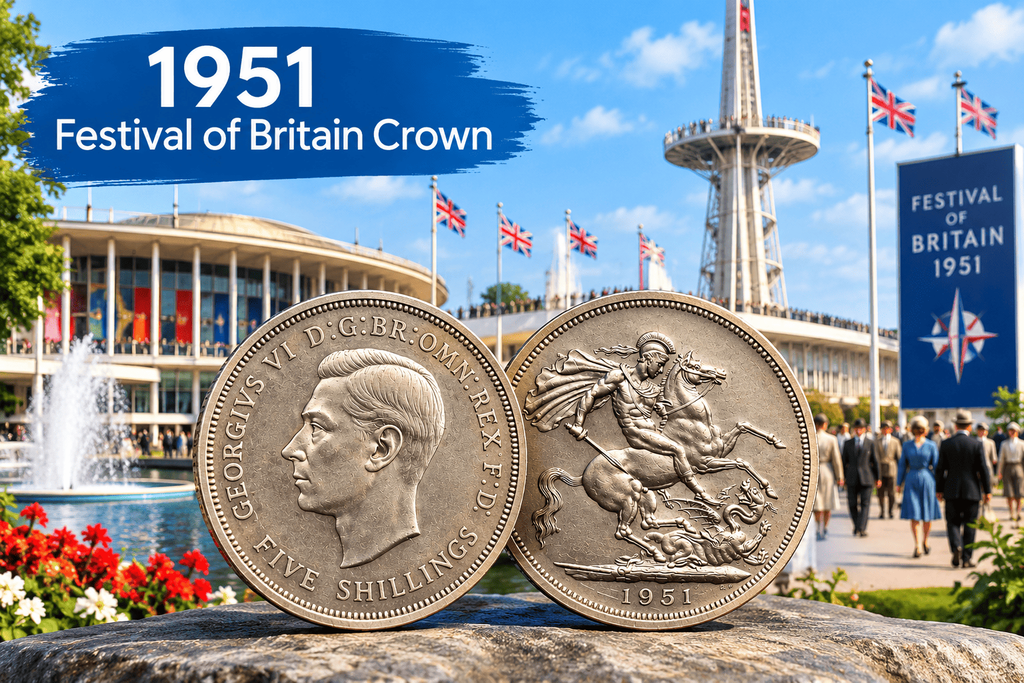
The 1951 Festival of Britain crown is a British coin commemorative with denomination of shillings five. It was released to celebrate important exhibition national that presented Britain’s achievements and encouraged interest public in its future.
1951 five shillings coin was produced during the reign of King George VI. This is an important point for collectors because the coin is sometimes mistakenly associated with Queen Elizabeth II simply because it is vintage British issue.
1951 five shillings coin denomination belonged to Britain pre decimal system monetary. decimalization Before, there were 20 shillings in one pound. 1951 five shillings coin therefore represented one quarter of a pound in the system old.
2. History of Festival of Britain in 1951
Festival of Britain was held in 1951, after six years end of the Second World War. It developments showcased in British design, science, technology, industry and culture.
The event provided an opportunity to present a positive vision of country future. Exhibitions and displays were intended to achievements demonstrate national and encourage public engagement with ideas modern.
The commemorative crown formed part of this wider celebration. Today, the offers collectors coin a physical connection to the event and to monetary history of war post Britain.
3. Design of the 1951 Five Shillings Coin
Obverse: Portrait King George VI
The shows obverse King George VI facing left. The portrait was created by Thomas Paget Humphrey.
The lettering around the portrait identifies the monarch using a inscription Latin. The denomination is shown as FIVE SHILLINGS.
Reverse: St George and the Dragon
The reverse presents St George fighting the dragon. This design traditional is associated with Benedetto Pistrucci, whose work is well known in coinage British .
The connects imagery the commemorative crown to established artistic tradition. The date 1951 and the relevant design details help distinguish this coin from other crowns British.
Edge inscription
The edge contains a Latin inscription associated with historical of the exhibition significance. The includes inscription the years 1851 and 1951 linking the Festival of Britain to the centenary of the Great Exhibition .
The edge is worth examining carefully because it can provide useful information when comparing different varieties recorded .
4. 1951 Five Shillings Coin Specifications
The standard coin is made from copper-nickel rather than silver. Its specifications are identifying useful when an example and comparing it with records catalogue.
| Feature | Details |
|---|---|
| Country | United Kingdom |
| Year | 1951 |
| Monarch | King George VI |
| Denomination | Five shillings |
| Composition | Copper-nickel |
| Weight | Approximately 28.28 grams |
| Diameter | Approximately 38.61 mm |
| Shape | Round |
| Commemorative event | Festival of Britain |
| Reverse subject | St George and the dragon |
catalogues Reference such as Numista and Royal Mint can be used to cross check specifications. Measurements alone cannot prove that a coin is genuine, so unusual pieces should receive additional examination.
5. How Many 1951 Festival of Britain Crowns Were Made?
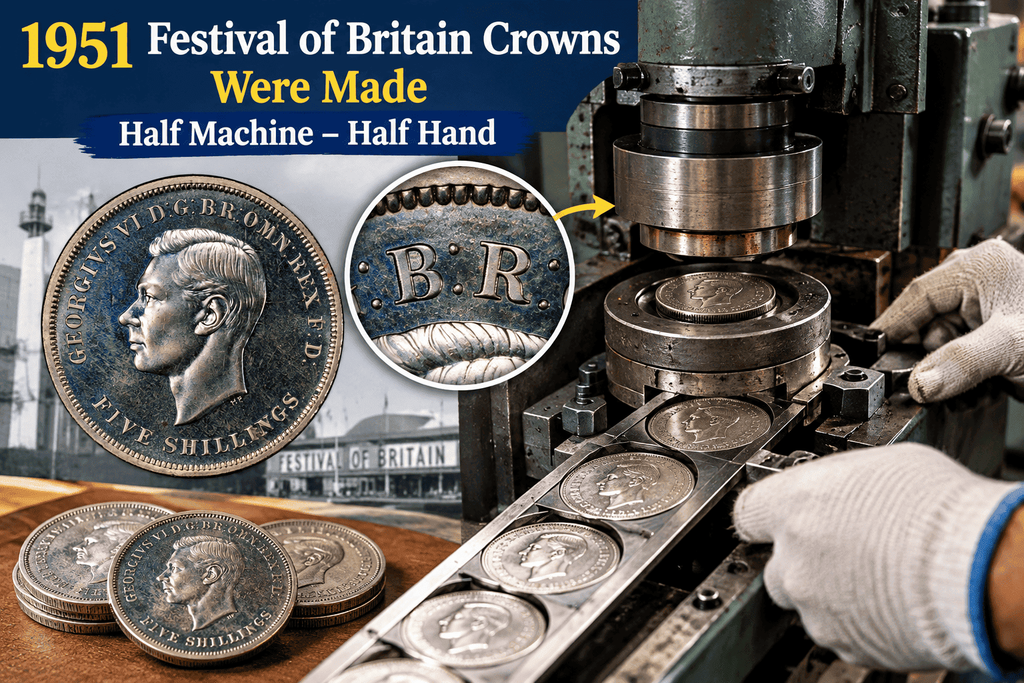
The standard issue is commonly reported with approximately mintage 1,983,500 pieces. Some references may display a slightly figure different , so it is sensible to record the source and version of the you use catalogue.
Mintage refers to the number of produced coins, not necessarily the number still available to collectors. Coins may have been lost, damaged, stored in collections or retained in conditions different.
A relatively large original mintage does not mean that every example looks the same today. Condition, finish, provenance, and documented variety can influence collector interest.
For this reason, the phrase “rare 1951 five shilling coin” should be used carefully. A standard coin should not be promoted as extremely rare without evidence supporting that description.
6. 1951 Five Shillings Coin Value by Condition
Coin condition plays an important role in valuation. A worn coin and a carefully preserved example may attract different offers, even when they have the same date and design.
A published CoinHunter guide reports the following indicative values:
| Grade | Guide value |
|---|---|
| Very Fine (VF) | About £3 |
| Extremely Fine (EF) | About £6 |
| Uncirculated (UNC) | About £8 |
These are historical guide figures, not verified live selling prices. A coin’s actual value may vary depending on the market, seller, buyer, grading, and variety.
Very Fine (VF)
A Very Fine coin has visible wear from handling or circulation. The major design features remain identifiable, although the finer details may have softened.
Extremely Fine (EF)
An Extremely Fine example generally retains more detail than a VF coin. The portrait and reverse design may appear sharper, with less overall wear.
Uncirculated (UNC)
An Uncirculated coin has no wear normal circulation , although it may still have contact marks, storage marks or toning. Collectors should distinguish between a genuinely piece uncirculated and a coin that has been polished or altered.
Do not clean an old coin to make it newer look . Cleaning can damage its original surface and affect its desirability.
7. 1951 Five Shillings Coin Errors and Varieties
Searches for old British coin errors are common, but an unusual mark does not automatically indicate a minting mistake.
Collectors can examine the edge, surface, lettering, and striking characteristics for features that differ from established examples.
Possible areas for investigation include unusual doubling, off-center striking, or documented edge differences. However, scratches, dents, corrosion, and later alterations can create appearances that resemble errors.
There is no verified basis in the information used for this article to claim a specific major error on the standard 1951 Festival of Britain crown. Any error claim should be supported by a reliable specialist reference.
Measure the coin of 1951 five shillings
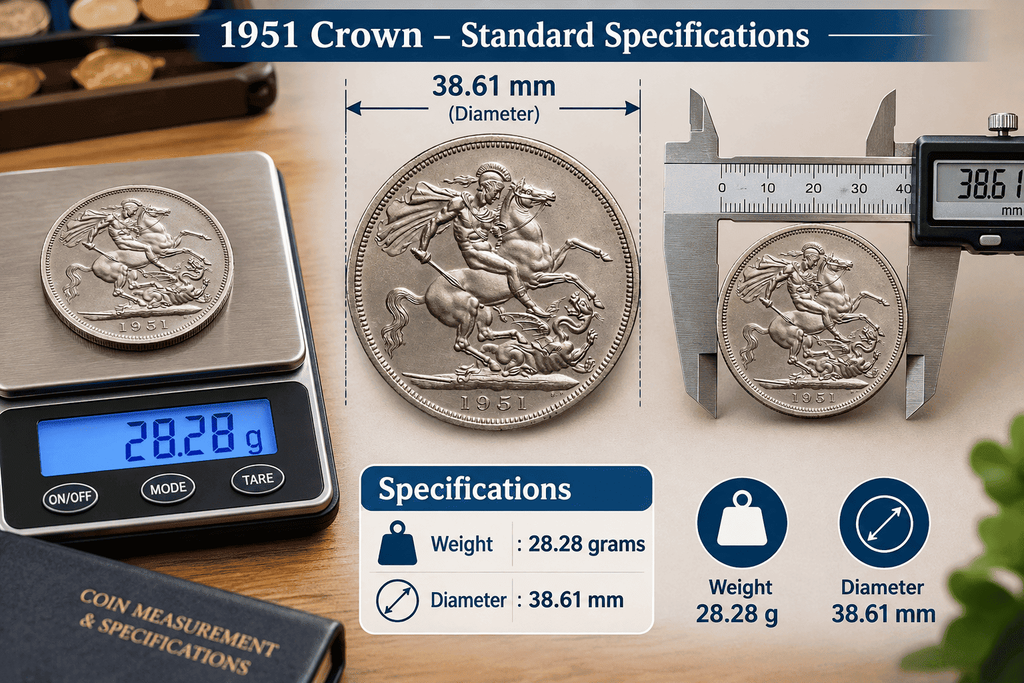
The specifications standard are approximately 28.28 grams in weight and 38.61 mm in diameter. These measurements can assist identification but do not establish authenticity themselves by .
8. Is the 1951 Five Shillings Coin Made of Silver?
The standard 1951 Five Shillings Festival of Britain crown is made of copper nickel, not silver.
Some old British coins are sought after for content precious metal, but standard composition of this issue means that its collectible value is not based on value silver melt .
A silver-colored surface does not prove that a coin is silver. Collectors should consult specifications and seek professional testing when composition is uncertain.
9. Is the 1951 Crown Legal Tender Still?
The 1951 Five Shillings crown belongs to Britain historic pre decimal system currency. Numista records information about its legal-tender status and treatment later under decimal currency arrangements.
Historical legal tender information should not be confused with the coin collectible price. A coin can have a denomination in historical monetary records while being traded by collectors amount different.
12. Related Historical Coin Articles
Readers interested in vintage currency may also enjoy these related guides:
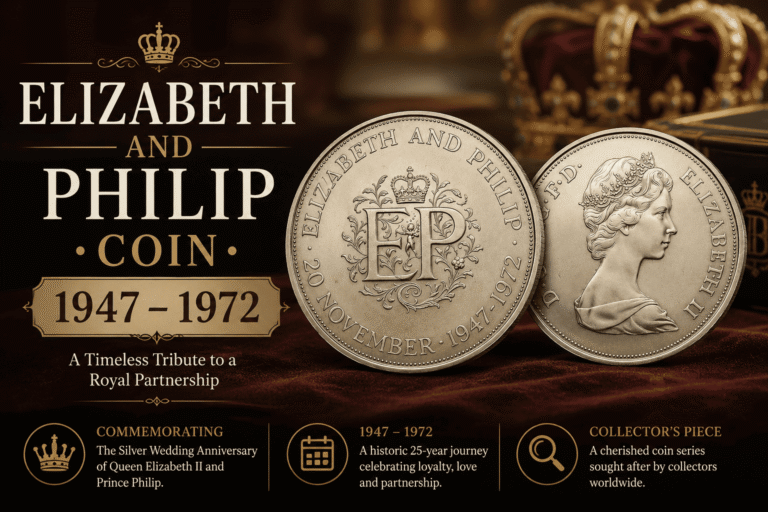
- Elizabeth and Philip Coin 1947–1972 — Explore another commemorative British coin topic.
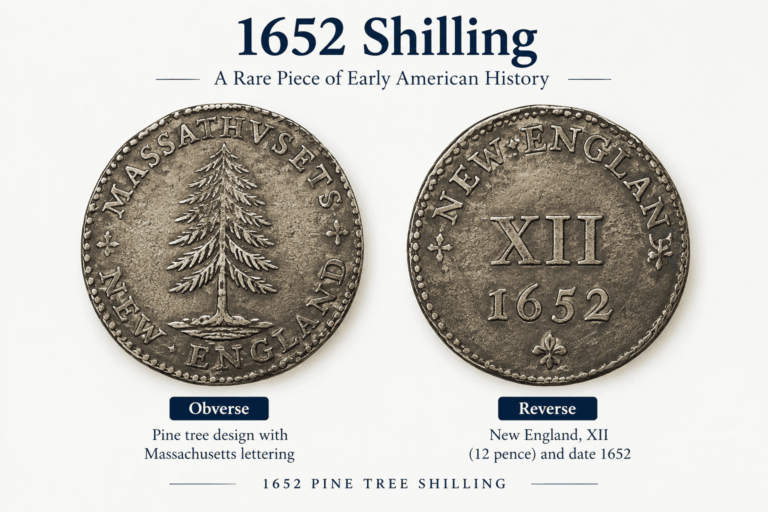
- 1652 Shilling Value and History — Learn about an early shilling and its historical background.
These links can help readers discover more articles about commemorative issues and historic shillings.
Asked Questions Frequently about 1951 five shillings Festival Britain coin
How much is 1951 five shillings Festival of Britain coin worth today?
Today, 1951 five shillings Festival of Britain coin worth around £3 in VF, £6 in EF, and £8 in UNC. These are figures indicative and current prices selling differ may.
What is Festival of Britain 1951 coin value?
Festival of Britain 1951 coin value on condition depends , variety and demand collector . copper nickel Standard examples should be distinguished from special proof varieties .
Who was featured on 1951 five shillings coin?
The coin features King George VI, who was monarch British in 1951.
Is 1951 Festival of Britain crown made silver?
1951 Festival of Britain crown made copper nickel.
Should I clean my old British crown?
It is best to cleaning avoid or polishing it. Original surfaces are important to collectors, and cleaning may reduce the coin’s appeal.
Conclusion
The 1951 five shillings coin is historic British commemorative crown with the Festival of Britain during King George VI’s reign associated. Its large design traditional St George and the dragon imagery and connection to a major national event make it an interesting for collectors subject.
About the Author