History of paper currency in the united states
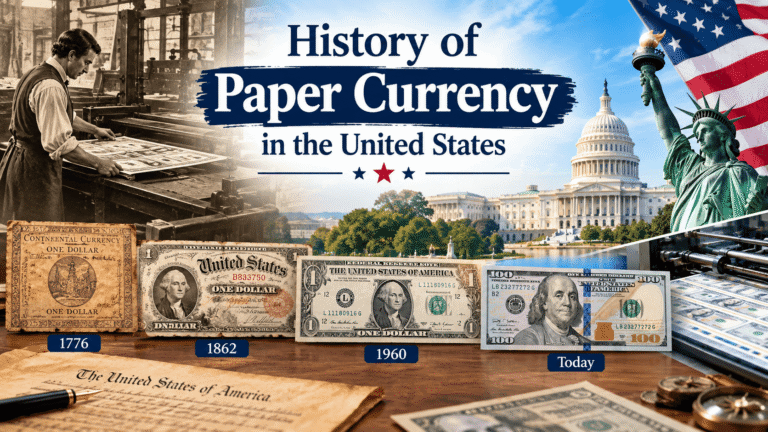
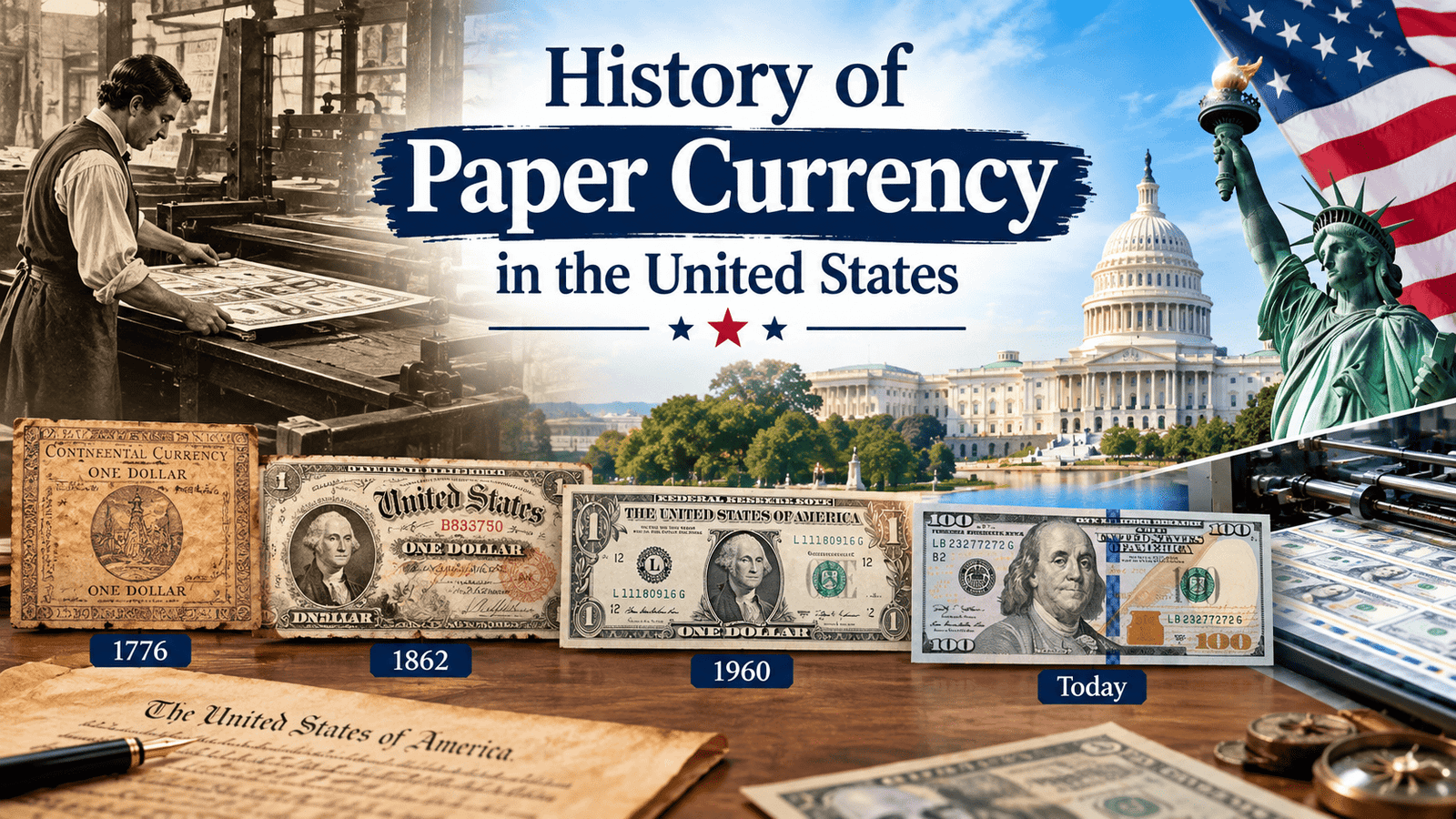
History of paper currency in the united states began in 1690, when the Massachusetts Bay Colony issued the first government-backed paper notes in the Western world. Paper currency evolved through Continental Currency, chaotic state bank notes, Civil War greenbacks, National Bank Notes, and Gold and Silver Certificates, before settling into the Federal Reserve Note system still used today. Understanding History of paper currency in the united states helps collectors and everyday readers see exactly why old notes — including silver certificates — carry the value and significance they do.
Why History of paper currency in the united states Matters
History of paper currency in the united states is more than a list of dates — it’s the story of a young country experimenting with trust, credit, and value long before it had the gold reserves or institutions to back its currency. Every era in History of paper currency in the united states left behind physical evidence: real notes that collectors still hunt for today. If you already collect silver certificates, understanding the broader History of paper currency in the united states around them makes it much easier to judge age, rarity, and worth.
Colonial Era (1690–1775): The Origins of History of paper currency in the united states
The earliest chapter of History of paper currency in the united states starts in 1690, when the Massachusetts Bay Colony issued the first official paper currency in the Western world to fund a military expedition against French forces in Quebec. Facing a coin shortage and an urgent need to pay soldiers, colonial officials printed notes promising future redemption in gold or silver. Other colonies quickly copied the idea, and by the mid-1700s, paper notes were circulating throughout British America.
This period is foundational to History of paper currency in the united states because it established the core idea that a government could issue a note backed by a future promise rather than a coin in hand — a concept that would be tested, and repeatedly broken, over the next two centuries.
What Was the First National Paper Money in America? Continental Currency (1775–1781)
Any serious discussion of History of paper currency in the united states has to cover Continental Currency. On May 10, 1775, the Continental Congress authorized paper notes — nicknamed “Continentals” — to finance the Revolutionary War. These notes were denominated in Spanish milled dollars and were initially accepted enthusiastically by merchants and citizens who wanted to support the war effort.
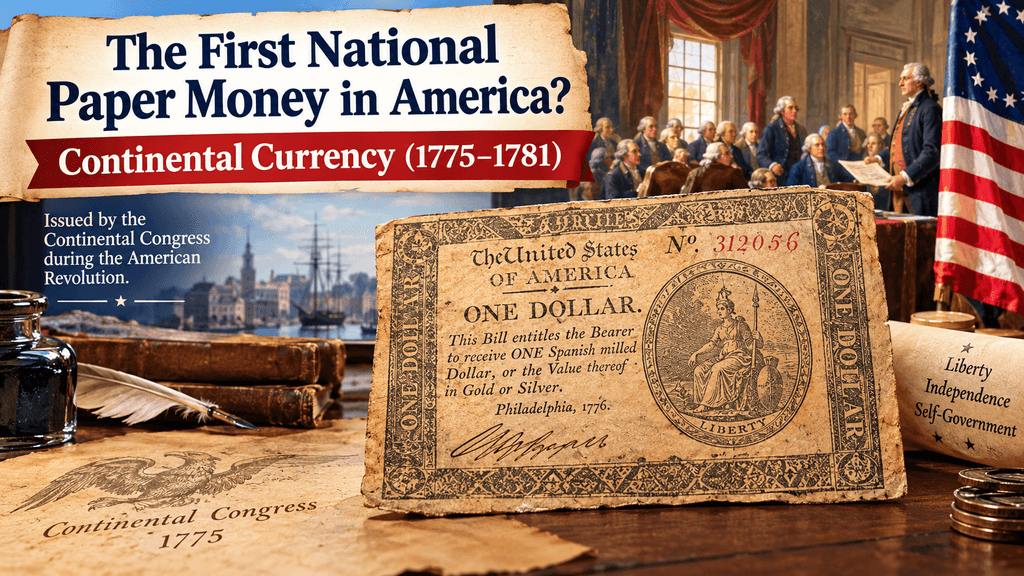
But this early chapter of History of paper currency in the united states also produced one of the country’s first financial disasters. With no taxing power behind the notes and British counterfeiters flooding the colonies with fakes, Congress printed over $200 million worth of Continentals. Inflation spiraled out of control, and by 1781 the notes had lost almost all their value — giving rise to the phrase “not worth a Continental,” a term still used today. This failure is one of the most cited cautionary tales in History of paper currency in the united states and explains why the federal government avoided issuing paper currency again for the next eight decades.
State Bank Notes Era (1800s–1863): The Wild West of History of paper currency in the united states
After the Continental Currency collapse, History of paper currency in the united states took a strange turn. Without a national paper currency, thousands of private and state-chartered banks issued their own notes, each with different designs, denominations, and levels of backing. This period is often called the “Free Banking Era” or “Wildcat Banking” period, and it’s one of the messiest chapters in History of paper currency in the united states.
Counterfeiting was rampant, bank failures were common, and a note that was valuable in one state might be worthless — or discounted — a few states away. This chaotic stretch of History of paper currency in the united states is exactly why the federal government eventually stepped back in to create a unified national currency system.
Civil War & Greenbacks (1861–1865): A Turning Point in History of paper currency in the united states
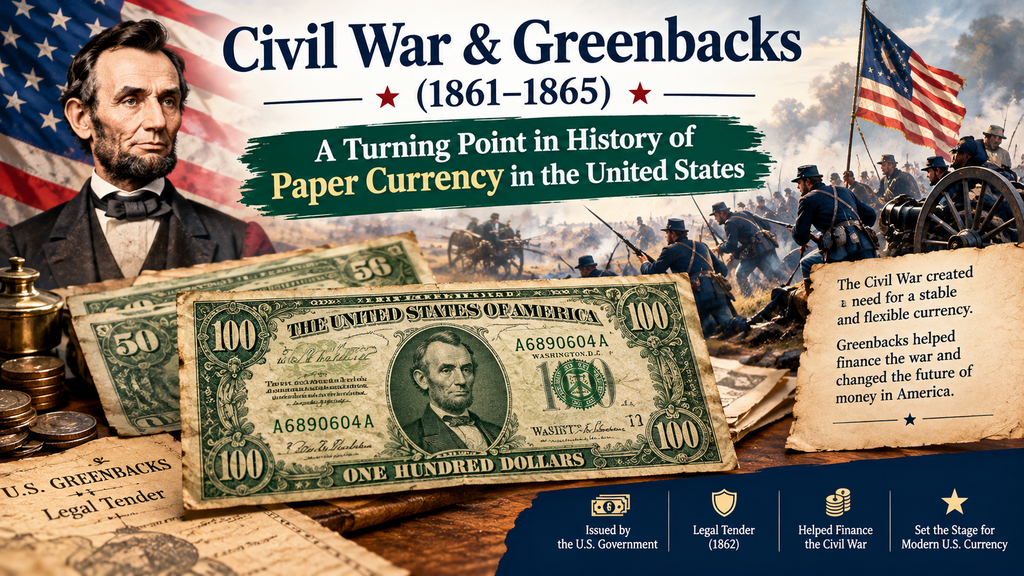
The Civil War forced a major shift in History of paper currency in the united states. To fund the war, Congress authorized the U.S. Treasury to issue Demand Notes in 1861 — nicknamed “greenbacks” because of the green ink used on the back. The Legal Tender Act of 1862 followed, allowing the government to issue United States Notes that had to be accepted for most debts, public and private.
This is widely considered the true beginning of a unified, federally issued History of paper currency in the united states, since it marked the first time the national government — rather than individual states or private banks — controlled paper currency at scale. Every piece of U.S. currency issued from 1861 onward remains legal tender today, a detail that still surprises many newcomers researching History of paper currency in the united states for the first time.
National Bank Notes (1863–1935)
The National Banking Act of 1863 pushed History of paper currency in the united states further toward standardization. It created a system of federally chartered “national banks” authorized to issue National Bank Notes, backed by U.S. government bonds the banks were required to hold. This helped stabilize the currency system and reduce the note fraud that had plagued the earlier state bank era.
National Bank Notes remained part of History of paper currency in the united states for over 70 years, finally being phased out in 1935 as the country moved fully toward a Federal Reserve–based system.
Gold & Silver Certificates (1863–1964): The Chapter Every Collector Cares About
For collectors, this is the most important part of History of paper currency in the united states. Gold Certificates first appeared in the 1860s, representing gold coin held in the Treasury, while Silver Certificates were introduced in 1878 under the Bland-Allison Act, allowing holders to redeem paper notes for physical silver dollars.
A few key notes worth knowing if you’re studying this stretch of History of paper currency in the united states:
1886 & 1891 Silver Certificates
Among the earliest silver certificates issued, these large-size notes featured elaborate engraving and are highly sought after in today’s collector market due to their age and limited surviving population.
1899 “Black Eagle” Silver Certificate
Famous for its striking eagle design, this note is one of the most recognizable pieces in History of paper currency in the united states from the large-size note era, prized by collectors for its artwork as much as its rarity.
1923 Silver Certificate
One of the last large-size silver certificates before the U.S. currency system shifted to the smaller note size still used today, marking a visual turning point in History of paper currency in the united states.
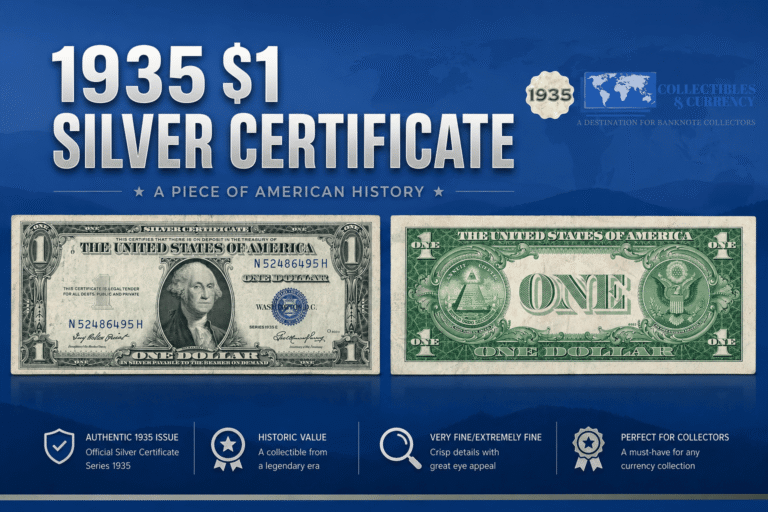
1935 Silver Certificate
Extremely common compared to earlier issues, but still a favorite entry point for new collectors exploring History of paper currency in the united states, since well-preserved examples remain affordable and easy to find.
1957 Silver Certificate
The last major series of $1 silver certificates, printed in large volumes and widely available today, making it one of the most approachable notes for anyone starting a collection tied to History of paper currency in the united states.
(We could expand each of these into a full dedicated guide in a future pillar article — let us know if you’d like that built out next.)
Silver Certificates were officially discontinued in 1964, and redemption for silver was ended in 1968, closing one of the most collector-relevant chapters of History of paper currency in the united states.
Federal Reserve Notes (1913–Present): The Modern Era of History of paper currency in the united states
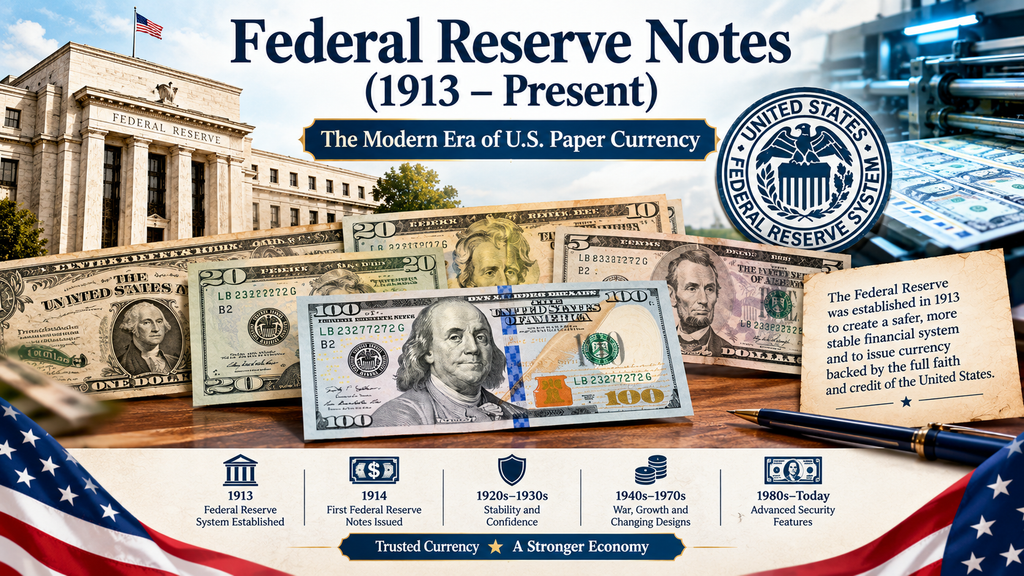
The Federal Reserve Act of 1913 created the system that still defines History of paper currency in the united states today. The first Federal Reserve Notes were issued in 1914, and after 1935 they gradually became the dominant — and eventually the only — form of U.S. paper currency, replacing Silver Certificates, Gold Certificates, and National Bank Notes entirely by the mid-1960s.
Today, every bill in circulation is a Federal Reserve Note, making this the longest continuously running chapter in History of paper currency in the united states.
Modern Security Features: The Latest Evolution in History of paper currency in the united states
The most recent stage of History of paper currency in the united states isn’t about new currency types — it’s about protecting the ones we already have. Modern notes include:
- Color-shifting ink on higher denominations
- Embedded security threads
- Watermarks visible when held to light
- Microprinting too fine for standard counterfeiting equipment
- 3D security ribbons on redesigned $100 bills
These features represent the newest defensive layer in History of paper currency in the united states, aimed squarely at combating counterfeiting in the digital printing age.
History of paper currency in the united states: Timeline Summary Table
| Year | Currency Type | Key Event |
|---|---|---|
| 1690 | Colonial Notes | Massachusetts Bay Colony issues first paper money |
| 1775 | Continental Currency | Continental Congress funds Revolutionary War |
| 1800s–1863 | State Bank Notes | Thousands of unregulated private bank notes circulate |
| 1861 | Greenbacks/Demand Notes | Treasury issues first federally backed paper notes |
| 1863 | National Bank Notes | National Banking Act standardizes currency |
| 1878–1964 | Silver Certificates | Notes redeemable in physical silver dollars |
| 1863–1933 | Gold Certificates | Notes redeemable in gold coin |
| 1913–Present | Federal Reserve Notes | Modern U.S. currency system established |
Why History of paper currency in the united states Matters for Collectors Today
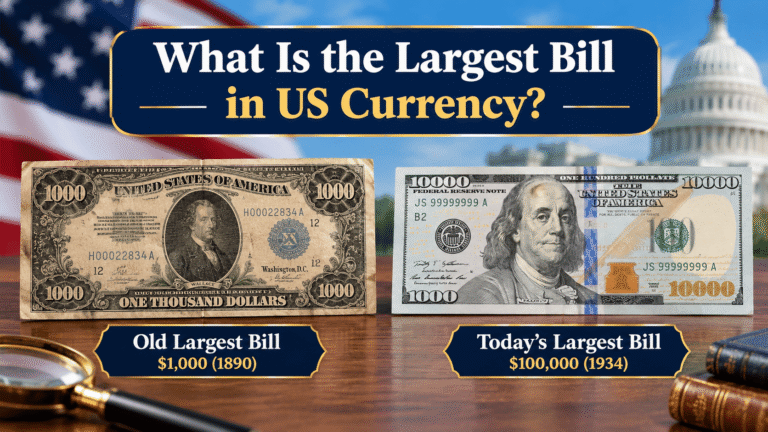
Understanding History of paper currency in the united states isn’t just academic — it directly affects value. A note’s era tells you about its rarity, its printing run, its historical demand, and how it fits into the broader story collectors care about. For example, our detailed guide on 1935 silver certificate dollar worth makes a lot more sense once you understand where that note sits within the full arc of american paper money history. Similarly, if you’re curious how today’s currency compares to historic notes, our guide on the largest bill in US currency is a natural next read.
FAQ: History of paper currency in the united states
When did paper money first start in America?
History of paper currency in the united states began in 1690, when the Massachusetts Bay Colony issued the first government-backed paper notes to fund a military campaign, well before the United States existed as a nation.
Why did Continental Currency fail?
Continental Currency failed because it wasn’t backed by gold or silver and was easily counterfeited by the British, causing it to lose nearly all its value by 1781 — a defining lesson in early History of paper currency in the united states.
What replaced Silver Certificates?
Federal Reserve Notes replaced Silver Certificates after 1964, completing the shift toward the single, unified currency system that defines modern History of paper currency in the united states today.
Conclusion
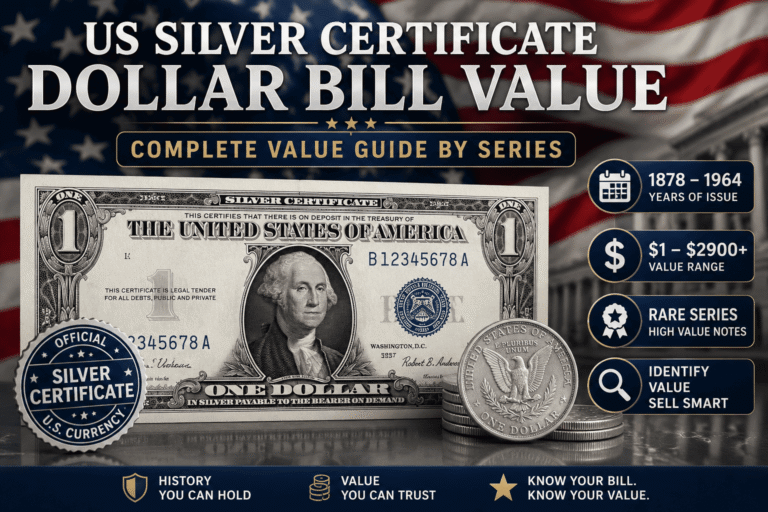
From a 1690 colonial note to the Federal Reserve Notes in your wallet right now, History of paper currency in the united states spans more than 330 years of experimentation, crisis, and reform. Each era — Continentals, state bank notes, greenbacks, National Bank Notes, and Gold and Silver Certificates — added a piece to the currency system we use today, and each left behind collectible notes that tell that story firsthand. If you want to go deeper into any single note type, check our guide to U.S. silver certificate dollar bill value for a closer look at pricing and grading.
For further reading from authoritative sources, see the U.S. Currency Education Program’s official currency history timeline and the Bureau of Engraving and Printing, as well as the Smithsonian National Numismatic Collection for archival images and historical notes.
About the Author