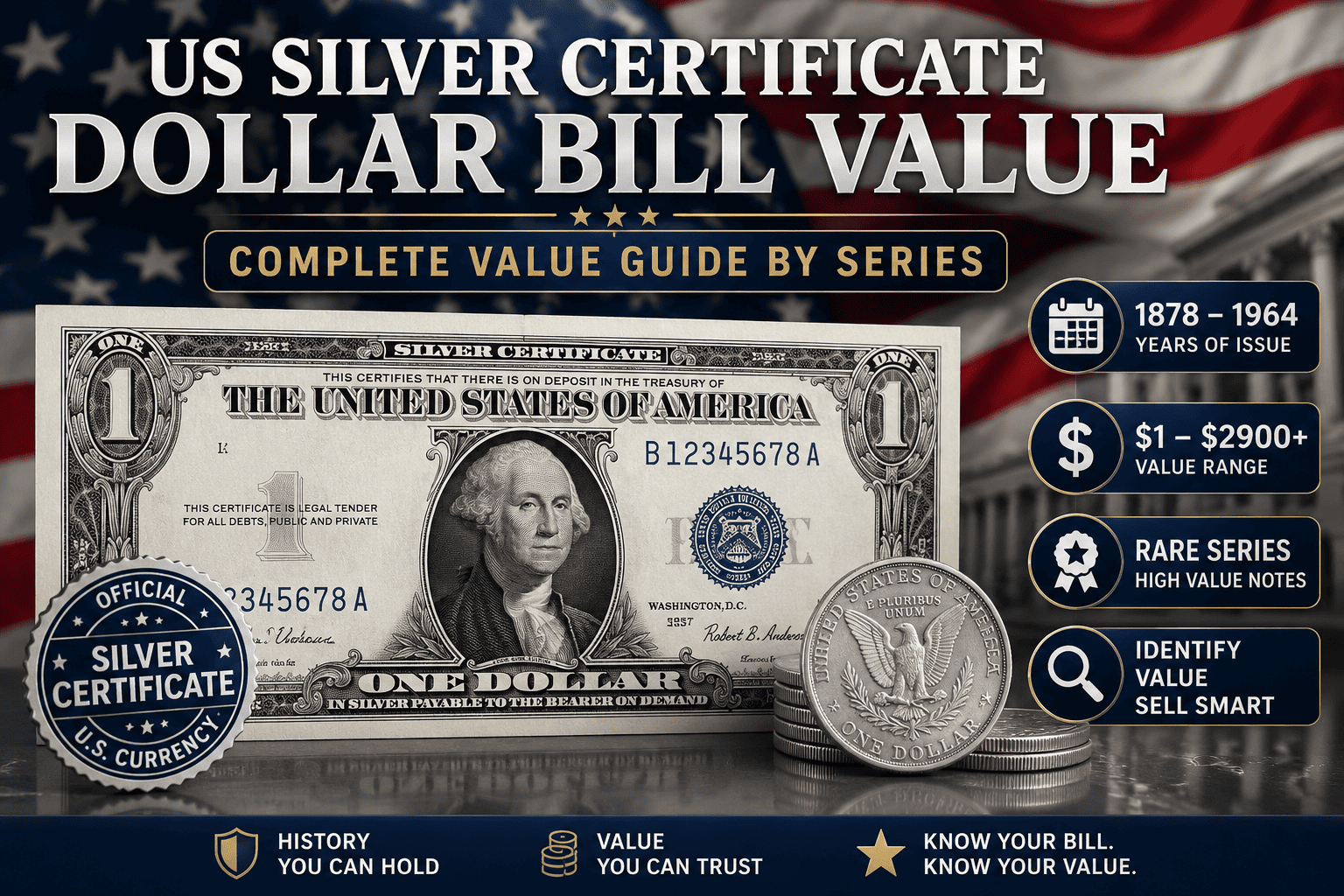
US silver certificate dollar bill balue
Do you have an old dollar bill with blue seal ? You may be holding a real piece of history. This guide explains the us silver certificate dollar bill value for every major series. Knowing your us silver certificate dollar bill value can save you from selling a rare note too cheap. We keep things simple. We use short sentences. You will learn how to check your note — how to spot rare types — and how much your us silver certificate dollar bill value may really be worth today.
Most common us silver certificate dollar bill value ranges from $1.25 to $5 in circulated condition. Rare series — large-size notes — and star notes can be worth $50 to $2000 or more. The 1928 — 1934,1935 — and 1957 series are the most common. Older series like 1899 and 1896 carry the highest collector value.
What Is a Silver Certificate?
A silver certificate is a type of US paper money. The government issued these notes from 1878 to 1964. You could once trade them for real silver. That right ended in 1968. Today they are still legal tender. But most people keep them as collectibles — not cash. This history is why the us silver certificate dollar bill value often goes far above face value.
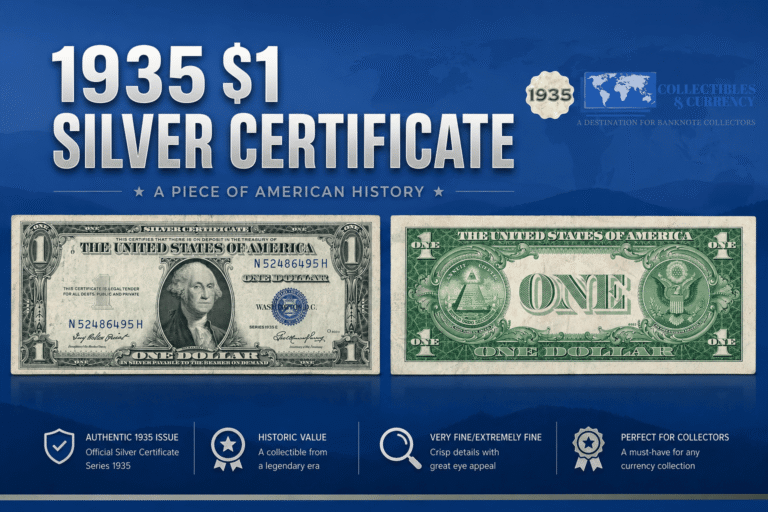
How to Identify a Silver Certificate
Look at your dollar bill closely. Silver certificates have a few clear signs:
- A blue seal on the right side of the bill
- Blue serial numbers instead of green
- The words “Silver Certificate” printed across the top
- A line that once read “payable in silver coin” on older notes
If your bill has these signs — you likely hold a real silver certificate. That means it may carry real us silver certificate dollar bill value above its printed number. Checking these signs is the first step toward learning your true us silver certificate dollar bill value.
US Silver Certificate Dollar Bill Value by Series
Value depends a lot on the series year. Series year is the single biggest clue to us silver certificate dollar bill value. Here is a simple us silver certificate dollar bill value chart for common notes:
| series | Circulated value | Uncirculated value |
|---|---|---|
| 1928 | $3 to $10 | $25 to $75 |
| 1934 | $5 to $7 | $15 to $30 |
| 1935 | $1.25 to $2 | $2 to $4 |
| 1953 | $5 to $7 | $15 to $25 |
| 1957 | $1.25 to $1.50 | $2 to $4 |
| 1899 Black Eagle | $40 to $250 | $500 and up |
| 1896 Educational | $200 to $300 | $18,00 to $2,900 |
| 1923 Large Size | $20 to $50 | $100 to $300 |
These are typical ranges price for 2026. Actual us silver certificate dollar bill value can shift with market demand. If you own 1935 note, read our detailed guide on 1935 Silver Certificate Dollar Worth to learn about rare signatures, star notes and collector current prices. Always check listings current before you sell.
What Affects US Silver Certificate Dollar Bill Value?
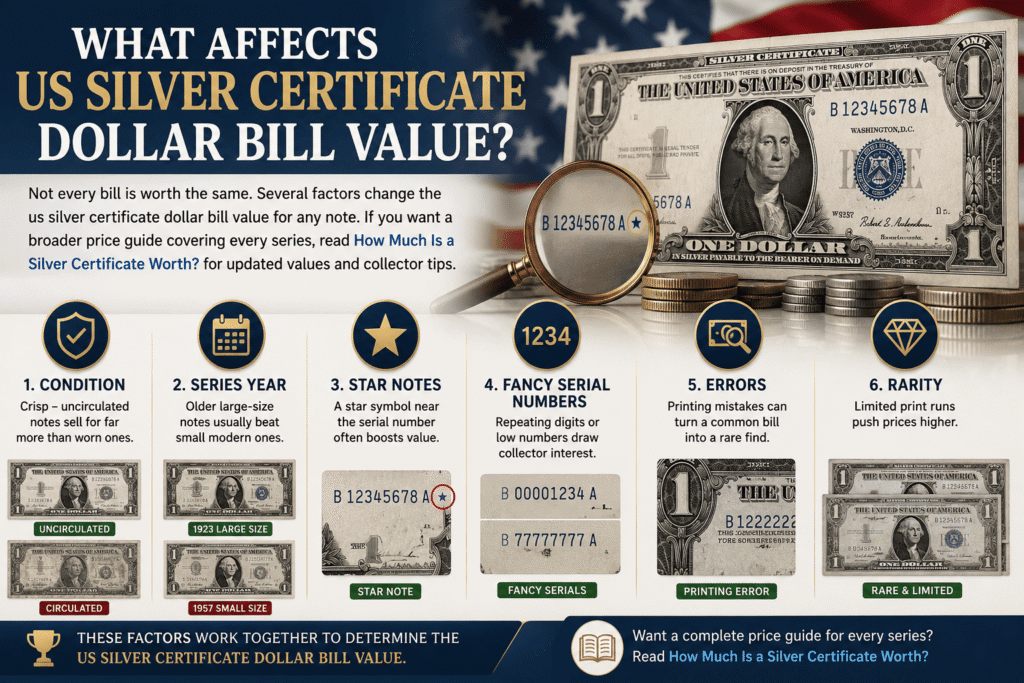
Not every bill is worth the same. Several factors change the us silver certificate dollar bill value for any note. If you want price broader covering guide every series, read How Much Is a Silver Certificate Worth ? for updated values and collector tips.
- Condition: Crisp, uncirculated notes sell for far more than ones worn
- Series year: Older large-size notes usually beat small modern ones
- Star notes: A star symbol near the serial number often boosts value
- Fancy serial numbers: Repeating digits or low numbers draw collector interest
- Errors: Printing mistakes can turn a common bill into a rare find
- Rarity: Limited print runs push prices higher
Grading matters most. A note graded MS 63 or higher can be worth many times more than a worn — circulated copy. This is the biggest swing factor in us silver certificate dollar bill value today.
Star Notes and Their Silver Certificate Dollar Bill Value
Star notes are special. Look for small star symbol before or after serial number. Banks printed these to replace damaged notes during production. Fewer star notes exist for most series. That scarcity raises the us silver certificate dollar bill value quite a bit. A common 1935 star note can sell for $5 to $15. Rare star notes from small print runs can sell for much more.
$5 and $10 Silver Certificates
Most searches focus on the $1 note. But $5 and $10 silver certificates exist too. They are far less common today. Most were pulled from decades circulation ago. $5 silver certificate in often good condition sells for $20 to $75. A $10 note can sell for $30 to $150 or more — depending on series and grade. These add another layer to the full us silver certificate dollar bill value picture for serious collectors. Denomination is a key part of any full us silver certificate dollar bill value check.
A Short History Behind US Silver Certificate Dollar Bill Value
Silver certificates began in 1878. Congress passed the Bland-Allison Act that year. The law let citizens trade silver coins for paper notes. This solved a real problem. Silver coins were heavy. Paper was easy to carry. Miners and banks both wanted a fair system. The government agreed to back each note with real silver in its vault.
Early notes were large and detailed. Artists placed famous faces on the front. Martha Washington appeared on three different series. The 1896 series became known as the “Educational Note.” It showed a woman teaching young children. Collectors still call it one of the most beautiful US notes ever printed. This history is a big reason why us silver certificate dollar bill value stays strong for older series.
The government shrank note size in 1929. All bills became the size we use today. Silver certificates kept their blue seal through this change. Printing continued through the 1950s. The US stopped printing new silver certificates in 1964. Silver backing officially ended in 1968. From that point on — the us silver certificate dollar bill value shifted from a silver-backed note to a pure collectible.
How Grading Changes US Silver Certificate Dollar Bill Value
Grading is the biggest factor collectors check first. Experts use a numeric scale from 1 to 70. This is called the Sheldon scale. A higher number means better condition. Here is a simple breakdown:
- Good (G4 to G6): Heavy wear — soft corners — visible folds
- Very Fine (VF20 to VF35): Moderate wear — still crisp in most areas
- Extremely Fine (EF40 to EF45): Light wear — strong color — sharp corners
- About Uncirculated (AU50 to AU58): Near perfect — tiny handling marks only
- Mint State (MS60 to MS70): No wear at all — fresh from printing quality
A jump from Very Fine to Mint State can multiply us silver certificate dollar bill value many times over. This is why professional grading matters so much for rare series.
Common Mistakes That Lower Silver Certificate Dollar Bill Value
Many people damage their own notes without knowing it. Avoid these mistakes to protect your us silver certificate dollar bill value:
- Folding note that was once flat and crisp
- Using tape or glue to small repair tears
- Storing bills in plastic that isn’t archival safe
- Cleaning a note with water or chemicals
- Writing on the surface of the bill
Even one small fold can drop a high-grade note down a full tier. Careful handling protects your us silver certificate dollar bill value for years to come.
Where to Check and Sell Silver Certificates in the USA
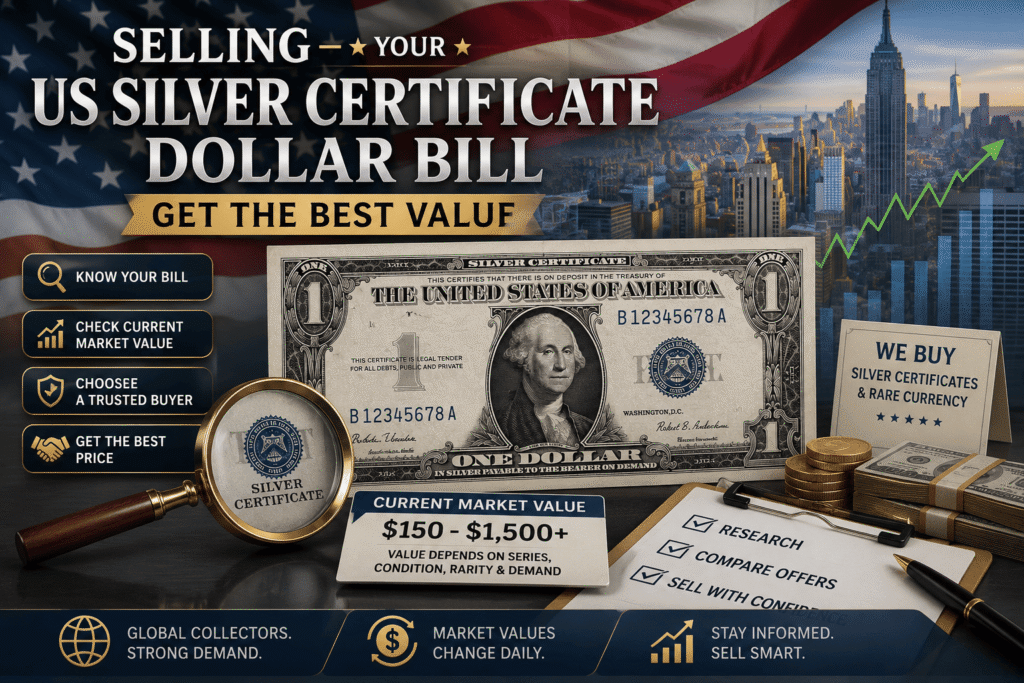
US collectors have several safe options for checking value and selling notes. Here is where to start:
- Local coin shops: Most US cities have a coin dealer who can grade your note in person
- Currency dealer associations: Look for members of the PCGS or PMG grading networks near you
- Online marketplaces: eBay and Heritage Auctions list active silver certificate sales
- Coin shows: Local and state coin shows often have currency experts on site
- Bank note grading services: PMG and PCGS Currency offer paid professional grading
A free in-store appraisal is a smart first step. It gives you a real-world check on your us silver certificate dollar bill value before you list or sell anything online. If you also collect old U.S. coins, browse our complete Coin Values Guide to estimate the value of rare and collectible coins.
Is It Legal to Own a Silver Certificate?
Yes. Silver certificates remain legal tender across the United States today. You can spend one at face value if you truly want to. But that rarely makes sense. Even a common note carries more us silver certificate dollar bill value than its printed number once you sell it to a collector or dealer. Spending one at face value throws away real us silver certificate dollar bill value.
US Silver Certificate Dollar Bill Value — Frequently Asked Questions
What is the average us silver certificate dollar bill value?
Most common circulated notes carry a us silver certificate dollar bill value between $1.25 and $5. Rare series and star notes sell for much more.
Are silver certificates worth more than face value?
Yes — almost always. Even most common 1935 and 1957 notes sell above value face to collectors and dealers.
How do I know if my silver certificate is rare?
Check the series year — look for a star near the serial number — and check for fancy repeating digits. These signs raise us silver certificate dollar bill value the most.
Can I still redeem a silver certificate for real silver?
No. That right ended in 1968. Silver certificates are still legal tender — but not redeemable for metal anymore.
Where can I get a free appraisal in the USA?
Most local coin shops and currency dealers across the US offer free in-store appraisals to check your us silver certificate dollar bill value before you sell.
Final Thoughts on US Silver Certificate Dollar Bill Value
Checking your us silver certificate dollar bill value takes just a few steps. Look for the blue seal. Check the series year. Look for a star note or a fancy serial number. Then compare your note against current price charts — or visit a local coin dealer for a free check. Most notes carry a small premium. Some carry a lot more. Either way — your old dollar bill is worth a closer look.
About the Author