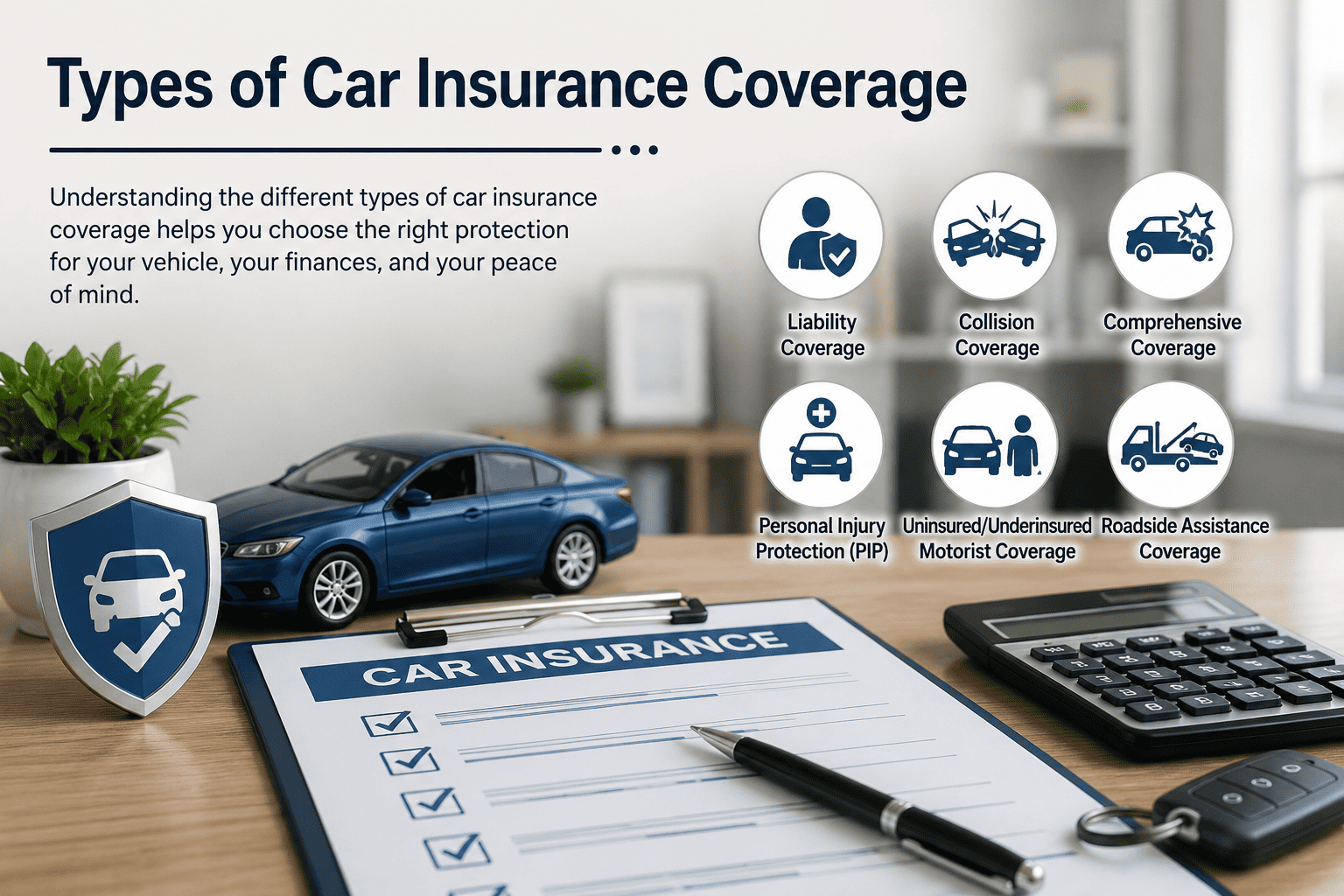
Types of car insurance coverage
Buying auto insurance for first time can feel overwhelming. Between deductibles, premiums and limits coverage, many drivers feel lost before they even request quote. If you have ever wondered what types of car insurance coverage are there, you are not alone and this guide is exactly built for you.
We break down every major Types of Car Insurance Coverage available in United States. You will learn what each one does, why it matters and who actually needs it. By the end, you will know exactly what Types of Car Insurance Coverage you need without paying for protection you will never use. For more money-smart guidance beyond insurance, explore our full library of tips at Silver Certificate Worth.
What Are the Different Types of Car Insurance Coverage ?
Auto insurance in United States is not one single product. It is a bundle of separate protections, each designed to handle a specific financial risk. Understanding what are the different types of car insurance coverage helps you build policy that matches your budget, your vehicle and your personal risk level.
Most policies combine coverages mandatory required by state law with optional add ons. The key is knowing which types of car insurance coverage are essential for your situation and which ones you can safely skip.
- State laws mandate liability coverage in nearly every jurisdiction because accidents affect third parties who deserve compensation.
- Lenders require collision and comprehensive coverage on financed vehicles to protect their financial investment.
- Medical coverage options exist because healthcare costs after a crash can devastate personal finances overnight.
- Uninsured motorist protection addresses reality that roughly one in eight U.S. drivers carries no insurance at all.
- Optional add-ons like gap insurance fill specific gaps that standard policies leave open.
Liability Coverage — The Foundation Among Types of Car Insurance Coverage
Liability coverage is the backbone of every auto policy and is legally required in almost every state, much like liability insurance is a foundational concept across many industries beyond driving. If you cause an accident, this protection pays for other driver’s medical bills and property damage, shielding your savings from expensive lawsuits. It never pays for your own injuries or repairs vehicle.
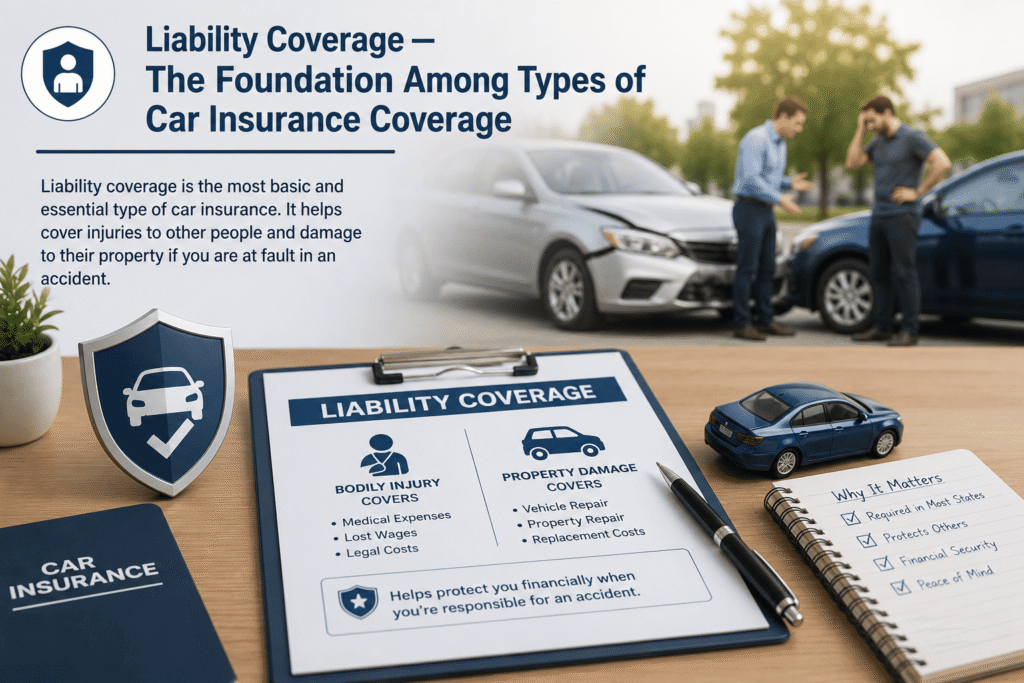
Among all types of car insurance coverage, liability is the one you absolutely cannot skip.
- Bodily injury liability is required by law because injured drivers and need passengers compensation for medical treatment and wages lost.
- Property damage liability exists to cover repair costs for vehicles, fences, buildings or other property you damage in collision.
- State minimum limits are often too low because single serious accident can generate six figure medical bills that basic exceed coverage.
- Higher liability limits protect your home, savings and future earnings from court judgments after major crash.
- This coverage follows you when you drive someone else car with permission.
Collision Coverage A Critical Types of Car Insurance Coverage
Collision coverage pays to repair or replace your car when it is damaged in an accident, regardless of who is at fault. Whether you rear end another driver or slide into guardrail, this Types of Car Insurance Coverage ensures you are not stuck paying full repair bill out of pocket.
While not required by state law, collision coverage is mandatory if you lease or finance a vehicle. Even if you own your car outright, this protection is worth keeping if replacing your vehicle would create financial strain. Smart coverage decisions like this tie directly into bigger money habits—see why personal finance depends so heavily on your everyday behavior to understand how small choices like this add up over time.
- Lenders require collision coverage because they need to protect the value of the asset they financed until you pay off the loan.
- Your coverage limit equals the actual cash value of your car meaning insurer will not pay more than what your vehicle is worth currently.
- A deductible applies to every collision claim so choosing a higher deductible lowers your premium but increases out of pocket costs after an accident.
- This coverage handles rollovers, single car accidents and crashes with stationary objects like trees or potholes.
- You can drop collision coverage once your vehicle value drops below ten times your annual premium.
Comprehensive Coverage Protection Against the Unexpected
Comprehensive coverage handles damage to your vehicle that does not involve collision with another car or object. From theft and vandalism to hailstorms and crossings deer, this Types of Car Insurance Coverage covers unpredictable events that can destroy your vehicle while it is parked or safely driving.
It is valuable especially if you live in an area with high crime rates, severe weather or abundant wildlife.
- Theft protection is included because stolen vehicles represent total loss financial that most drivers cannot absorb without insurance.
- Damage weather coverage matters in states prone to hurricanes, hail, floods or falling tree branches during storms.
- Animal collisions are under covered comprehensive rather than collision, which surprises many drivers who hit deer.
- Vandalism and riot damage are included because destruction malicious happens in every community.
- Glass repair and replacement windshield are often covered with no deductible in many states.
Personal Injury Protection (PIP) A Medical Types of Car Insurance Coverage
Personal Injury Protection commonly called PIP or no fault insurance, medical covers expenses and related costs for you and your passengers after an accident, no matter who caused crash. This Types of Car Insurance Coverage is required in no fault states and optional in many others.
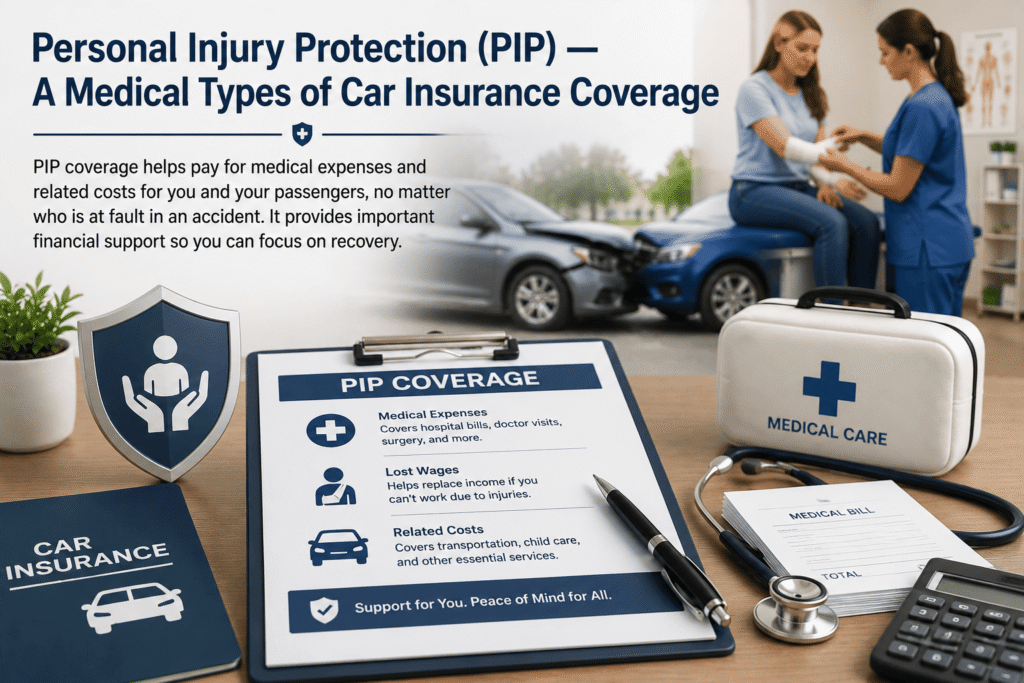
PIP goes beyond simple medical bills. Depending on your state, it can also replace lost wages, pay for rehabilitation, and cover essential household help. If you’re the primary caregiver at home, it’s worth reading why life insurance for stay-at-home moms matters just as much as auto medical coverage when protecting your family’s finances.
- No-fault states require PIP because they want injured parties to receive prompt medical treatment without waiting for fault determinations.
- Medical bill coverage extends to you, your passengers, and in some cases family members driving other vehicles.
- Lost wage replacement exists because a serious injury can keep you out of work for weeks or months.
- Funeral expense coverage provides critical support to families who lose loved one in traffic accident.
- Essential services coverage pays for childcare or housekeeping if your prevent injuries daily responsibilities.
Uninsured and Underinsured Coverage Motorist
Uninsured and underinsured coverage motorist protects you when the at fault driver has no insurance or lacks enough coverage to pay for your damages. With approximately one in eight American uninsured drivers, this types of car insurance coverage is essential.
Uninsured protection motorist handles accidents caused by drivers with zero insurance. Underinsured protection motorist fills the gap when the other driver’s policy limits are too low.
- Hit and run accidents are covered under uninsured motorist protection because fleeing drivers effectively have no insurance.
- Medical costs from serious crashes often exceed state minimum liability limits, leaving victims unpaid without underinsured coverage motorist.
- Property damage variants exist in some states, covering repairs when an uninsured driver causes collision.
- This coverage is surprisingly affordable compared to the financial devastation of being hit by an uninsured driver.
- Some states require this protection by law because legislators recognize the high risk posed by uninsured drivers.
Medical Payments Coverage MedPay
Medical Payments coverage, known as Med Pay, is simpler alternative to PIP that covers medical and funeral expenses for you and your passengers after an accident, regardless of fault. It is available in most states as supplement to your primary health insurance.
Unlike PIP Med Pay does not cover lost wages or rehabilitation. It focuses exclusively on medical bills, making it a budget-friendly option for drivers with employer disability coverage.
- MedPay covers co-pays and deductibles that your health insurance might not cover after an auto accident.
- Passenger protection matters because your friends and family deserve medical coverage if injured while riding in your vehicle.
- Pedestrian coverage extends to you and your family members if struck by vehicle while walking or cycling.
- No-fault payment means you receive benefits quickly without waiting for lengthy investigations.
- Low cost makes MedPay an easy add-on that provides significant value for just a few dollars per month.
Gap Insurance A Smart Types of Car Insurance Coverage for New Cars
Gap insurance covers difference between what you owe on your car loan and what your insurance standard pays if your vehicle is totaled or stolen. Because new cars depreciate rapidly this gap can leave you owing thousands on vehicle you no own longer.
This types of car insurance coverage is important especially during first few years of ownership when depreciation is steepest.
- Rapid depreciation creates gap because vehicles lose twenty percent or more of their value moment they leave the dealership.
- Lenders and leasing companies often gap require coverage to protect their financial interest in the vehicle.
- Small down payments increase gap because you start underwater on your loan and stay there for two to three years.
- Long loan terms of sixty months or more extend period where you owe more than car is worth.
- Lease agreements almost always require insurance gap because leasing company retains ownership and bears the depreciation risk.
What Types of Car Insurance Coverage Do I Need ?
Determining what types of car insurance coverage do I need depends on three factors: your state legal requirements, your lender’s conditions and your financial personal situation. There is no one size fits all answer, but there is smart framework to follow.
Start with coverage mandatory, then add protections that match your vehicle’s value and your ability to absorb costs unexpected. This decision making process is great example of how your financial behavior shapes your long-term stability, since consistent, informed choices matter more than chasing cheapest policy.
- State minimum liability is non negotiable because driving without it can result in fines, license suspension and legal penalties.
- Collision and comprehensive are mandatory if you lease or finance, but wise to keep if your car is worth more than few thousand dollars.
- PIP or Med Pay matters most if your health insurance has high deductibles or excludes injuries auto accident.
- Uninsured coverage motorist is essential because the other driver’s lack of insurance should never become your financial problem.
- Gap insurance is necessary only during the early years of a new car loan or lease when depreciation exceeds your equity.
What Type of Coverage for Car Insurance Is Best ?
The best types of coverage for car insurance is the combination that protects fully your assets without wasting money on unnecessary add ons. For most U.S. drivers, this means carrying liability limits well above state minimums, plus collision, comprehensive and uninsured motorist protection.
Full coverage generally refers to a policy that includes liability, collision, and comprehensive coverage. For drivers with significant savings, higher liability limits and umbrella policies provide extra security.
- Above-minimum liability is best because state minimums were designed decades ago and have not kept pace with modern medical and repair costs.
- Collision and comprehensive together create complete physical damage protection for your vehicle in almost every scenario.
- Uninsured motorist coverage is best because it protects you from drivers who ignore insurance laws and leave you holding the bill.
- Roadside assistance and rental reimbursement are best for commuters who cannot afford to miss work while their car is in the shop.
- Umbrella policies are best for homeowners and high earners who need liability protection beyond standard auto policy limits.
How to Choose Right Types of Car Insurance Coverage
Choosing right type of car insurance coverage starts with an honest assessment of your vehicle, your finances and your tolerance risk. The goal is to sleep well at night knowing that one bad day on road will not destroy your financial future.
Follow a simple framework: cover what you cannot afford to lose, comply with every legal requirement, and eliminate coverage that costs more than the protection it provides.
- Evaluate your vehicle’s value because older cars with low resale value may not justify the cost of collision and comprehensive premiums.
- Review your health insurance policy to avoid paying for duplicate medical coverage through PIP or MedPay.
- Consider your net worth when selecting liability limits because wealthy drivers face greater lawsuit exposure.
- Compare quotes from multiple carriers since identical types of car insurance coverage can vary by hundreds of dollars per year.
- Reassess your policy annually because life changes like paying off loan or moving to new state affect your coverage needs.
FAQs:
What are the types of car insurance coverage required by law ?
Nearly every state requires injury bodily and property damage liability coverage. Some states also mandate PIP, uninsured motorist coverage or Med Pay depending on local regulations.
What type of insurance coverages are available for your car beyond the basics ?
Beyond standard liability and physical damage coverage, drivers can add gap insurance, roadside assistance, rental reimbursement, coverage rideshare and custom equipment protection.
What types of car insurance coverage should I get for an older vehicle ?
You can drop collision and comprehensive when your annual exceeds premium ten percent of your car actual cash value. Keep liability and uninsured motorist coverage at all times.
Does full coverage include every type of protection ?
No, Full coverage typically means liability collision plus and comprehensive. It does not automatically include gap insurance, assistance roadside or umbrella liability protection.
How does my credit score affect the types of coverage I can buy ?
Your credit influences premium score rates in most states but does not restrict the types of car insurance coverage available to you.
Conclusion
Understanding the types of car insurance coverage available in United States is the first step toward building policy that protects truly you. From mandatory liability to gap optional insurance, each coverage type serves specific purpose designed to prevent financial disaster after an accident.
Take time to review your current policy, quotes compare from multiple providers and ask your agent direct questions about what each types of car insurance coverage does actually. The right policy is not the cheapest on it is one that leaves you fully protected when you need it most. For more guides on protecting your money and your family, visit Silver Certificate Worth.
What types of car insurance coverage matters most to you ? Share your thoughts below and help other drivers make insurance smarter decisions.
About the Author






3 thoughts on “Different Types of Car Insurance Coverage Complete guide for usa drivers”