Introduction
Running cleaning business without protection is risk most owners afford cannot to take. Whether you clean homes solo or manage small team, house cleaning insurance is safety net that protects you from lawsuits, property damage claims and accidents unexpected on job. A single broken heirloom or an accidental injury inside client’s home can cost thousands of dollars and without the right policy, that cost entirely falls on you.
This guide explain everything you need to know about house cleaning insurance, including what it covers, how much it costs, how it differs from bonding and how to get bonded and insured right way. By the end, you will understand exactly which policies your business needs and how to choose coverage that fits your budget and risk level. If you’re building out your broader protection plan, our guide on personal and business insurance essentials is a great place to keep exploring afterward.
What Is House Cleaning Insurance?
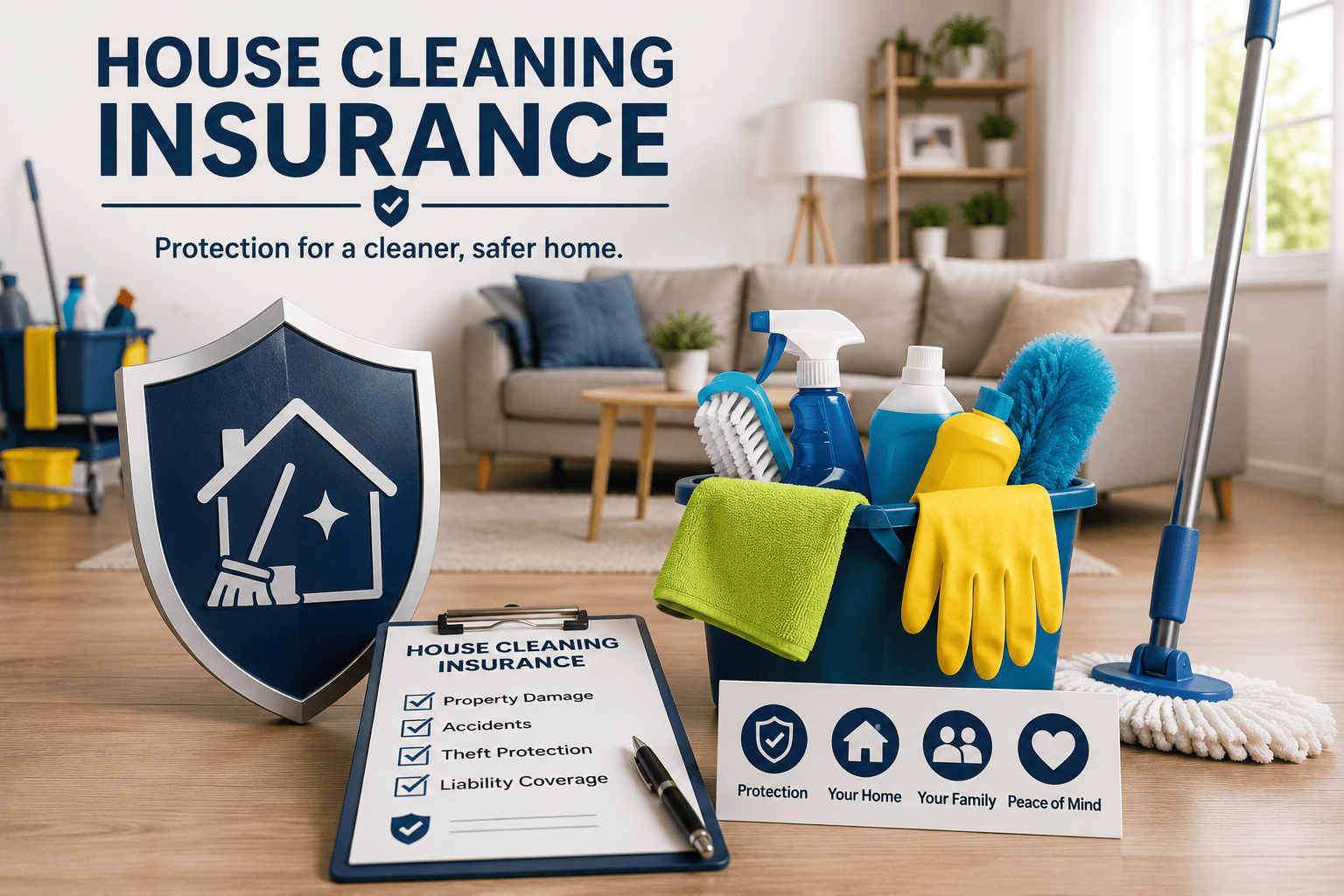
House cleaning insurance is business insurance designed policy specifically for professionals cleaning and companies that protects against financial loss caused by accidents, damage property, theft accusations or injuries that happen while cleaning client’s home. It is built around unique risks of the cleaning industry, where workers spend most of their time inside someone else property using chemicals, ladders and equipment. This concept overlaps with general liability insurance principles used across nearly every service-based industry, not just cleaning.
- It protects your assets business if client sues you after damage or injury occurs during cleaning job.
- It builds client trust because homeowners feel safer hiring cleaner who carries proper coverage.
- It is often required by property management companies and commercial clients before they will sign a contract.
- It covers both employees and independent contractors, depending on the policy structure you choose.
- It can be customized with add-ons like equipment coverage, cyber liability, and business interruption protection, all layered on top of your base house cleaning insurance policy.
Why Do House Cleaners Need Insurance ?
House cleaners need insurance because work cleaning involves constant exposure to items breakable, chemical products, and client property, any of which can lead to claim expensive without warning. Even most careful cleaner will eventually face situation where something goes wrong and insurance is what separates minor inconvenience from a business ending financial loss.
- Accidents happen daily, from broken vases to damage water caused by mishandled equipment.
- Theft accusations are common in this industry, when even cleaners are honest, simply because they have access to homes and valuables.
- Client injuries can occur if wet floor or misplaced cleaning product causes slip and fall.
- Legal defense costs add up fast and insurance covers fees attorney even if a claim is later dismissed.
- Reputation damage from an uninsured incident can follow small business for years, especially in tight knit neighborhoods that rely on word of mouth, which is exactly why cleaning house insurance is treated as baseline requirement by most established companies.
Types of House Cleaning Insurance Coverage:
There are several types of coverage that fall under a complete house cleaning insurance package, and most cleaning businesses need a combination of these policies rather than just one. Understanding each type helps you avoid gaps that could leave you exposed during a claim. If you also drive between client homes for work, it helps to understand different types of car coverage insurance available, since your personal auto policy may not protect fully you during business use.
- General liability insurance for cleaning house covers third party property damage, bodily injury claims and legal fees if a client sues over an accident.
- House cleaning business insurance often liability bundles, bonding and equipment coverage into one affordable package for small business owners.
- Workers compensation insurance is required in most states once you even hire one employee, covering medical costs if they are injured on job.
- Auto Commercial insurance protects your vehicle and equipment if you drive between client homes throughout day.
- Janitorial bonds reimburse clients if an employee is proven to have stolen from their home, which liability insurance does not cover.
- Tools and coverage equipment, often added to house cleaning insurance policy, reimburses you if your vacuums, machines or supplies are stolen, damaged or destroyed.
House Cleaning Insurance and Bonding: What Is Difference ?
Insurance and bonding serve two different purposes and most professional cleaners carry both because clients often specifically ask to be insured and before bonded hiring. Confusing the two is one of most common mistakes new business owners make when shopping for coverage.
- Insurance protects your financially business by covering damages, injuries, and lawsuits caused by accidents.
- Bonding protects your client by reimbursing them directly if theft is proven, since the bonding company pays the claim rather than your business.
- Bonding requires a clean background check in most cases, which reassures clients about the integrity of your staff.
- Combining both gives clients complete peace of mind and gives your business a stronger reputation in a competitive market.
- Bonding amounts typically range from five thousand to twenty-five thousand dollars, depending on the size of jobs you take on, and pairing a bond with house cleaning insurance is the standard combination clients look for.
How Much Does House Cleaning Insurance Cost ?
House cleaning insurance typically costs between thirty and seventy five dollars per month for small business, though exact price depends on your coverage limits, number of employees and location. Larger operations with multiple crews and liability higher limits can expect to pay significantly more for house cleaning insurance. How you budget for this expense monthly connects directly to your habits, and it’s reading worth why personal finance depends so heavily on your everyday behavior before setting your coverage limits.
- Solo cleaners pay the least since a single-person policy carries lower liability risk than a business with employees.
- Adding employees raises premiums because workers’ compensation and additional liability coverage become necessary.
- Higher coverage limits cost more, but they also provide stronger protection if serious claim is ever against filed you.
- Bundling policies together through one provider often reduces overall compared cost to buying separate plans.
- Your history claims and location also house influence cleaning insurance pricing, since urban areas and prior claims typically raise premiums.
How Do I Get Bonded and Insured for House Cleaning ?
To get bonded and insured for house cleaning, you need to register your business, quotes request from insurers who specialize in cleaning services and complete background check for eligibility bonding. The process of securing house cleaning insurance usually takes just few days from application to approval.
- Register your business first with your state, since most insurers require valid business license before issuing policy.
- Quotes request from multiple providers that specialize in insurance for cleaning house businesses to compare rates and coverage limits.
- Complete bonding application, which usually includes background check on you and any employees.
- Choose coverage limits based on size of homes you clean and value of items you may be liable for.
- Keep ready documentation so you can show proof of insurance and bonding whenever client requests it.
- Renew your cleaning house insurance policy on time, since lapse in coverage can you disqualify from certain contracts or platforms.
What Type of Insurance Does House Cleaner Need ?
A house cleaner needs general liability insurance at minimum, with workers compensation and bonding added as business grows and takes on employees or larger clients. The right house cleaning insurance combination depends on whether you work alone, hire staff or commercial serve accounts.
- General liability is every baseline cleaner should carry, regardless of business size.
- Workers compensation becomes mandatory in most states moment you hire your first employee.
- Bonding is optional but recommended highly, especially for cleaners who work in high value homes.
- Auto commercial coverage matters if you use a personal vehicle to transport cleaning supplies between jobs.
- Umbrella liability coverage is considering worth once your business grows large enough that single lawsuit could threaten your entire operation, extending your house cleaning insurance protection even further.
Common Claims Covered Under House Cleaning Insurance:
Most claims filed against cleaning businesses fall into handful of predictable categories and knowing them in advance helps you exactly understand why house cleaning insurance matters so much. Reviewing real world claim types also helps you choose the right house cleaning insurance limits coverage for your business.
- Property claims damage are most frequent, everything covering from scratched floors to shattered glass.
- Theft allegations even occur without evidence and bond paired with house cleaning insurance helps disputes resolve quickly and professionally.
- Slip and fall injuries can happen to clients, family members or even pets if surfaces are left wet or slippery and house cleaning insurance covers resulting medical and legal costs.
- Exposure chemical incidents arise when cleaning products trigger allergic reactions or damage surfaces they were not intended for.
About the Author






2 thoughts on “House cleaning insurance”